The best ….

We must question ourselves on the things we do. Is it logical anymore or is it still relevant today ?

If we wish to do something, then let’s make our work “a piece of art” that can be truly appreciated and admired by our audience.

Otherwise don’t do.

Mediocrity gets us no where.

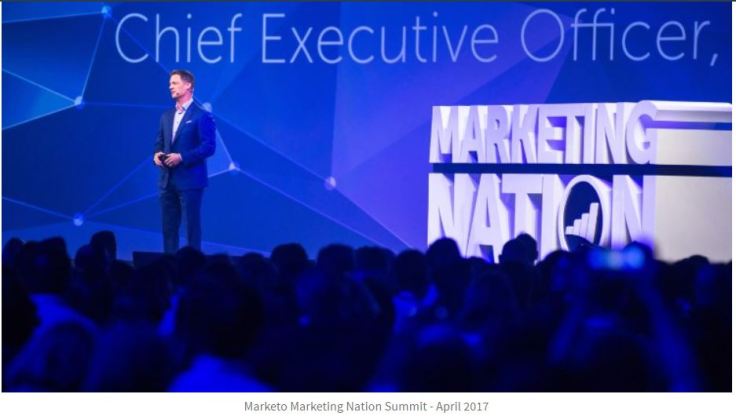
Year One as CEO: What I’ve Learned

Enjoyed reading this article by Steve Lucas. Thus, sharing it.

CEO

  • Published on Published onNovember 15, 2017
  • By Steve LUCAS

Here’s what I learned on Day One at Marketo: even after more than two decades in Marketing, Sales, and GM roles – having worked in the C-suite at multiple companies and counseled a number of global chief executives, nothing could have fully prepared me for becoming a CEO for the first time.

It used to be that a new CEO had a grace period. In your first weeks and months on the job, you were expected to embark on a listening tour, taking time to get to know your team, products, and customers. You would make incremental changes at the outset – just enough to hint at your leadership style, but not so big as to make waves.

That luxury no longer exists. Technology is disrupting and reshaping the marketing industry every day. The landscape is incredibly unsettled. Our customers are faced with more opportunity – and risk – than they’ve ever faced before. And they rightfully expect their service providers to cut through the complexity with elegant, powerful tools that meet their goals.

Over the course of my first year, I took notes on the core lessons I learned. Going forward, these notes will serve as my “North Star” as we continue to transform Marketo into an even more global organization that helps companies thrive in what I call the Engagement Economy – a new era that puts the onus on businesses to engage with customers on their terms. And since marketing is far from the only industry facing this level of disruption, I believe these observations will be a useful guide to almost any new CEO.

Passion for the Purpose

From minute one on the job, you’ll need to inspire and engage people, rallying them around a purpose. What you’ll find is that no matter how hard you lean in, some people just don’t want to go along for the ride. That’s why the first thing any software company needs is a passionate, engaged team that cares deeply for its customers. They understand that the organization only exists because customers choose to support it, so they must form a team that reflects exactly that level of commitment.

One tip for finding those who want to be engaged: Look for people who are passionate about things outside of work. To me, the people who go all-in on their interests outside of the office bring that fire with them inside the office and focus it on finding solutions and serving our customers with an equal sense of fervor.

Don’t Let Reality Get in the Way of Opportunity

We’ve all had a similar moment of frustration in a meeting: someone comes up with an idea for a brilliant solution. It elegantly solves a problem and delivers something of real value to your customers. Everyone in the room is excited… until reality smacks you in the face. The reality may be that the timeline for building the product is unrealistic or that there’s no room in the budget to fund it. Or it may be that it doesn’t seem feasible until three other priorities are addressed first.

The most common response to this problem is to acknowledge the reality and put the idea on a future “wish list,” ultimately avoiding the tough conversation that is the very thing your team needs you to lead. Don’t take the lazy approach – push harder! The job of the CEO is to push and prod. To dig beneath the surface and empower people to creatively solve problems. Extend your meeting an hour. Challenge your team to not leave the room until a solution emerges. And, most importantly, get right into the trenches with them to help figure it out.

Never Be Lukewarm

I can work with people who have a negative attitude. Sometimes they can be a useful foil, forcing me to consider all angles of a problem and come up with better solutions. But I absolutely can’t stand people who are lukewarm. If there’s a fire, I don’t want people who stand there and tell me there’s a fire. Either run toward it and help or get out of the way.

I love creative tension. If I’m in a meeting and someone disagrees with my approach, I say bring it. And I try to hold myself to the same standard. If someone brings me an idea or a solution for a challenge they have identified, I don’t want them to walk away from my desk without feeling like we have a resolution or an action plan.

Rock the Boat and Challenge Norms

From day one, I made it clear that Marketo team members have an extraordinary opportunity. With our scale, products, and customer base, we can do more than ride the wave of technological change – we can lead it. But we can’t do it if we believe in the old fallacy that the thing that worked yesterday will work tomorrow.

In any large organization, you’ll find people who are excited to shake things up and push themselves, their teams, and their companies to be better… and you’ll find others who are generally happy with the status quo and don’t feel any urgency to change. A CEO’s job is to identify those who are willing to take risks, rock the boat and then give them the chance to shine. Promote them to a job that’s just a bit beyond their reach and let them push themselves.

Follow the One Lesson That Matters Most

It’s impossible to do all of the things I’ve described without ruffling some feathers. And that’s ok – if it’s done respectfully and humbly. No CEO should walk around thinking their title means they have all the answers. And even if you come in as a change-maker, make sure to study your company’s history, spend time listening to the team you now lead, and keep an open mind.

Ultimately, I’ve found that any CEO is only as good as the people around him or her. Building consensus while boldly leading a new team through change is much easier said than done for any leader. Yet, in this age of disruption, it’s the ultimate measure of almost any CEO’s success. And it leaves us with the one lesson learned that matters most: Be brave. Be fast. Be bold.


Beautiful creations

The need to create is one of the deepest desire of the human soul.
Thus the artist must see not only through his eyes but also to express from his soul.

Art is not what you see. It is what you make others admire.

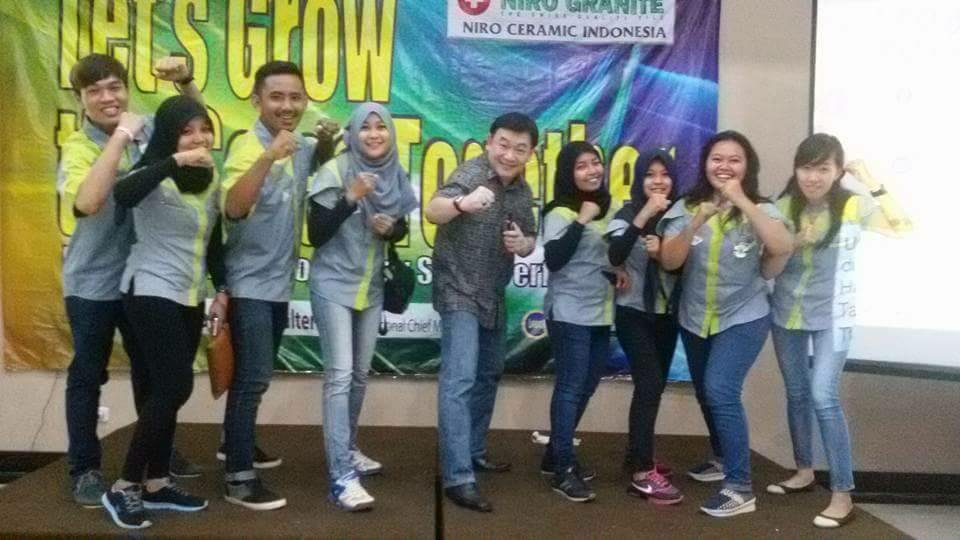
Floored by Niro Ceramic Indonesia.

Customer complaints

Every company  makes mistakes.
No matter how great it is.

To mantain reputation or to be even better, it is a must that EXCEPTIONAL EXTRAORDINARY efforts are rendered whilst handling complaints from an upset customer.

It should be quick, decisive and action oriented. Flexibility can be exercised. 

Only then will it encourage loyalty, appreciation and “promotion through word of mouth” by a contented customer.

Stronger relationships and customer retention are made in times of challenges and difficulties ; rather than in good times. Simply because, every grateful customer remembers a PROBLEM and how it is being resolved.

The MUSE

Connecting the seemingly unconnected.

We find ourselves and lose ourselves at the same time.

Perhaps thats creativity.

6 Simple Habits that Change Managers into Effective Leaders

Sharing this great article by John Eades

  • Published on August 23, 2017 @ LinkedIn

———————————————————————————————————————————

snip


The debate about the difference between a manager and leader has been settled. Without question, there is a difference in both definition and behavior.

Just to ensure we are on the same page, here are my favorite definitions of both in action form:

Management: The manipulation of others for your own success

Leadership: Serving and empowering the lives that have been entrusted to you

Unless you grew up in a place of worship or had really strong figures in your life that taught you about serving and empowering, you most likely default to management. Why? Because it’s what’s taught in high school, college and organizational leadership development programs. In many ways, our environment is teaching us to be managers, not leaders, but unfortunately, that’s not an excuse. Here are six habits that can help change managers into leaders.

  1. Find a Purpose Beyond Money

While there is no question that money is important in life, one of the best ways to make a leap towards being a leader is to find a true purpose in your work beyond money. If the only reason you go to work is for money, your people will know and you will never make the leap to serve.

If this is an area you struggle in, pick up Simon Sinek’s new book Find Your Why when it comes out in September.

  1. Decentralize Decision Making

Most people move into a position of management because they were good at their job. Typically their first actions are to solve all the worlds problems and be a major part in every decision facing the team. The problem is the people they are now leading are being treated as followers and have a sense of being in a subordinate position, thus creating more followers, not more leaders. As leadership expert David Marquet says, “followers have limited decision making authority and little incentive to give the utmost of their intellect, energy, and passion. Those who take orders usually run at half speed, underutilizing their imagination and initiative.”

The key here is to not only be ok with your people making decisions make it a core part of their job.

  1. Give and Serve Outside of Work

I don’t mean to give financially, I mean give your time. Winston Churchill famously said “We make a living by what we get. We make a life by what we give.”

Look for ways to volunteer in your community or start a support group. The point here is if you learn to give up your free time to serve those that you don’t know, you most certainly will begin to serve and empower those that you do at work.

  1. Focus on Your Example

The old adage ‘do as I say, not as I do’ is an awful way to lead and a sure-fire way to erode trust with your team. Leading by example encompasses all your actions, from what time you show up at the office, how much vacation you take, what you wear, to the moral and ethical decisions you make both at work and home.

The choices you make every single day are watched and judged by others. Do your actions exemplify the way you want to be portrayed? One of the most important things you can remember is not allowing your title to effect a positive example you set for your team.

  1. Thinking You Have to Be the Hero

Like most professionals, I met my biggest weakness early on. I thought I was the only person who could do things right, and I had to have my hand in every decision. Then someone told me,

“If you want to go fast, go alone. If you want to go far, go together.”

It was exactly what I needed to hear. From then on, I knew I didn’t have to be the hero. Now, I surround myself with talented people, ask for help, give more responsibility, and try to listen more than I talk.

  1. Stop Making Excuses

If you habitually struggle with saying or thinking on a regular basis “There is never enough hours in the day” or “this quarter is so important,” stop and reflect on what you are saying. Every quarter is important and every day is important but it shouldn’t for a minute stop you from thinking critically about how you are leading other people.

I don’t care what the circumstance eliminate your excuses, take responsibility and put in the work.

The Windshield Mentality

No matter if you are a manager or a leader, I want you to begin embracing the windshield mentality. All the windshield mentality is, is thinking about what’s ahead of you instead of behind you. Start thinking and planning how you are going to implement these habits moving forward and never look back!


Write …. don’t just talk.

Capture

Many many many years ago, to be a great sales professional, perhaps the greatest asset to have would be the ability to talk and present well. This was the needed “communication skill”.
Then, as one progressed to be a Manager or even higher, besides being able to talk well, one must also then be able to write well. Both talking and writing becomes equally important. However, “writing skills” was often neglected or overlooked.
TODAY, in our digital age ; and the creativity one can do on social media, the ability to WRITE and EXPRESS oneself are perhaps equally important if not more so than our ability to talk (or present).
Short/ concise/ captivating messages (artwork) can reach millions of people worldwide by a click of a button. Customers do not even have to see your face nor hear your voice to buy from you.
So, are you good/creative in sharing your ideas/thoughts in written-form or WORDS to seduce your customers ?

Why Your Company Culture Should Match Your Brand

Read a great article by Denise Lee Yohn. Sharing the article below.

—————————————————————————————————-

Ask people how to develop a good corporate culture, and most of them will immediately suggest offering generous employee benefits, like they do at Starbucks, or letting people dress casually, as Southwest Airlines does. Rarely do people point to encouraging employees to disagree with their managers, as Amazon does, or firing top performers, as Jack Welch did at GE.

But in fact, it’s having a distinct corporate culture — not a copycat of another firm’s culture — that allows these great organizations to produce phenomenal results. Each of these companies has aligned and integrated its culture and brand to create a powerful engine of competitive advantage and growth. Their leaders understand that a strong, differentiated company culture contributes to a strong, differentiated brand — and that an extraordinary brand can support and advance an extraordinary culture.

It doesn’t matter if your company culture is friendly or competitive, nurturing or analytical. If your culture and your brand are driven by the same purpose and values and if you weave them together into a single guiding force for your company, you will win the competitive battle for customers and employees, future-proof your business from failures and downturns, and produce an organization that operates with integrity and authenticity.

When you think and operate in unique ways internally, you can produce the unique identity and image you desire externally. You need to have employees who understand and embrace the distinct ways you create value for customers, the points that differentiate your brand from the competition, and the unique personality that your company uses to express itself — and your employees must be empowered to interpret and reinforce these themselves. You achieve this by cultivating a clear, strong, and distinctive brand-led culture.

If your culture and brand are mismatched, you can end up with happy, productive employees who produce the wrong results. For example, at a grocery store chain I worked with, employees were steeped in an operations culture that valued efficiency and productivity. As the industry moved toward an emphasis on customer service and merchandising, the company fell behind, because its employees were focused more on increasing inventory turns and sales per square foot. It had to confront the fact that its culture, though vibrant and vital, was holding it back from serving customers well and improving the brand image.

Without using your brand purpose and values to orient your culture efforts, you’re also likely to waste a lot of money. You may think you need to take extraordinary measures to attract and retain in-demand talent, like providing free lunches to employees, putting foosball tables and beer kegs in break rooms, and offering free gym memberships. As you try to one-up your competition in the war for talent, you’ll probably draw from a pool of perks and benefits that sound great but produce little more than a generic, fun work environment. And you may end up like social media software startup Buffer, which struggled to achieve profitability because its generous cultural practices, including offering vacation bonuses and wellness grants, ate away at cash flow instead of producing employees who were passionate about the brand offering and committed to developing on-brand innovations.

With a single, unifying drive behind both your culture and your brand, however, you reap the benefits of a focused and aligned workforce. No one needs to expend extra energy figuring out what to do or how to act in order to achieve what you want your company to stand for in the world. Your human resources aren’t trying to decipher what skills and behaviors will be needed in the future, or maintaining performance evaluation systems that are out of sync with your values. And your sales and marketing departments aren’t working at cross-purposes, each with its own view of what success looks like. Organizational silos are bridged and disjointed initiatives are minimized because everyone is singularly focused on the same priorities.

How can you tell if your culture and your brand aren’t interdependent and mutually reinforcing? A disconnect between your employee experiences and your customer experiences is a telltale sign. If you engage your employees differently from how you expect them to engage your customers, your organization is operating with two set of values.

I’m not just talking about the obvious problem of managers who treat their employees poorly. I recommend using the same principles to design and manage experiences for both employees and customers. If you want to consistently introduce new products and technologies to your customers, then cultivate a test-and-learn mentality among your employees and encourage them to experiment with the latest gadgets. If your brand is differentiated by the way your products and services look and feel, then infuse your employee experience with design and creativity. You can’t expect your employees to deliver benefits to customers that they don’t experience or embrace themselves.

Another indicator of a mismatch between your culture and your brand is the lack of understanding of and engagement with your brand among your people. Your employees should understand what makes your brand different and special from a customer perspective. They should clearly understand who the company’s target customers are, as well as their primary wants and needs. They should use your brand purpose and values as decision-making filters and they should understand how they contribute to a great customer experience — even if they don’t have direct customer contact. If your people think they don’t play a role in interpreting and reinforcing your brand and that brand building is your marketing department’s responsibility, then your culture lacks brand integrity.

To address these gaps and align and to integrate your brand and culture, start by clearly identifying and articulating your brand aspirations. Do you want your brand to be known for delivering superior performance and dependability? Or is your intent to challenge the existing way of doing things and position your brand as a disruptor? Or is your brand about making a positive social or environmental impact?

Once you know what type of brand you’re aiming for, you can identify the values that your organization should embrace. In the case of a performance brand, you should work on cultivating a culture of achievement, excellence, and consistency inside your organization, while a strong sense of purpose, commitment, and shared values is needed for a socially or environmentally responsible brand. When you have clarity on the values necessary to support your desired brand type, you can use it to inform and ignite other culture efforts, including organizational design, leadership development, policies and procedures, employee experience, etc.

How you operate on the inside should be inextricably linked with how you want to be perceived on the outside. Just as brands differ, there is no single right culture. Identify the distinct cultural elements that enable you to achieve your desired brand identity, and then deliberately cultivate them. When your brand and culture are aligned and integrated, you increase operational efficiency, accuracy, and quality; you improve your ability to compete for talent and customer loyalty with intangibles that can’t be copied; and you move your organization closer to its vision.

Denise Lee Yohn is a leading authority on building and positioning exceptional brands, and has 25 years of experience working with world-class brands including Sony and Frito-Lay.


Blog at WordPress.com.

Up ↑