Take charge ….
Correct it, if it is wrong. Add value to improve. That will change your destiny.
Do not be afraid to challenge the status quo ……
Stand up, be different and unique.

Everything you gain in life will rot and fall apart. All that will be left of you and be remembered well is what was in your heart.
Take charge ….
Correct it, if it is wrong. Add value to improve. That will change your destiny.
Do not be afraid to challenge the status quo ……
Stand up, be different and unique.
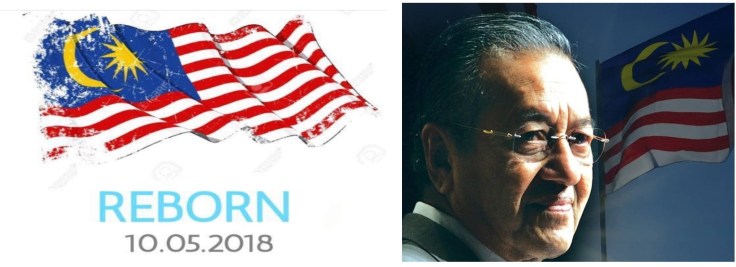
At 93 ….your energy, focus, alertness, wit and spirit are an inspiration to everyone.
SALUTE ……you have given back this beautiful country back to the rakyat.
Salam mubibah to all Malaysians.

Great article below.
This is so true. In meetings …we can see leaders butting in and not allowing others to finish what they have to say. These leaders have in fact literally shut down their learning process. It is not uncommon that great ideas do come from one’s subordinates. In fact the people on the ground should know best on improvements to be made and to contribute forward moving ideas.
Hence leaders should and must listen. This is one important way to grow.
Enjoy reading
Willie Low
http://www.passionsofwillie.com

Article below by – Dr. C. Otto Scharmer is a senior lecturer at the Massachusetts Institute of Technology.
Listening is probably the most underrated leadership skill. How you listen can be life-changing; not just business- or industry-changing.
At the heart of most examples of colossal leadership failures — which are in no short supply — leaders are often unable to connect with and make sense of the “VUCA” world around them; that is, a world defined by volatility, uncertainty, complexity and ambiguity.
Listening is important to us as individuals, not solely to leaders. If you are not a good listener, there is no way that you can develop real mastery in any discipline.
In my work, the most consistent feedback we have received from the hundreds of workshops, programs and innovation journeys we have facilitated is this: Shifting your mode of listening is life-changing. Shifting how you listen, the way you pay attention, sounds like a really small change.
But here is the thing: Changing how you listen means that you change how you experience relationships and the world. And if you change that, you change, well, everything.
It is truly amazing how quickly people can shift their way of listening and attending. What I mean by “attending” is this: Wherever you put your attention as a leader, as an innovator, as a change maker, or as a parent, that is where the energy of the system around you will go — including your own energy.
But being a leader who listens takes work: practice, review, peer feedback and more practice. To become a better listener, you must understand the four archetypes of listening.
The four types of listening reflect the underlying principles of the opening of the mind, heart and will are:
When you listen on Level 1, downloading, your attention is not focused on what the other person says but on your own inner commentary. For example, you may be planning what you will say next.
As you cross the threshold from downloading to factual listening (Level 1 to 2), your attention moves from listening to your inner voice to actually listening to the person in front of you. You open up to what is being said.
When you start to cross the threshold from factual to empathic listening (Level 2 to 3), your place of listening shifts from you to the other person. That is, from your small vehicle (the intelligence of your head) to your larger vehicle (the intelligence of your heart). You step into the other person’s perspective. For example, you might think, “Oh, I may not agree, but I can see how she sees this situation.”
Finally, when you cross the threshold from empathic to generative listening (Level 3 to 4), your listening becomes a holding space for bringing something new into reality that wants to be born. You listen with openness to what is unknown and emerging.
What I have learned in my work is that the success of leadership and change work — whether that’s organizational change, industry change or life-changing work — depends on the ability of you, the leader, to observe your quality of listening and to adjust the quality of listening to what is needed in each situation.
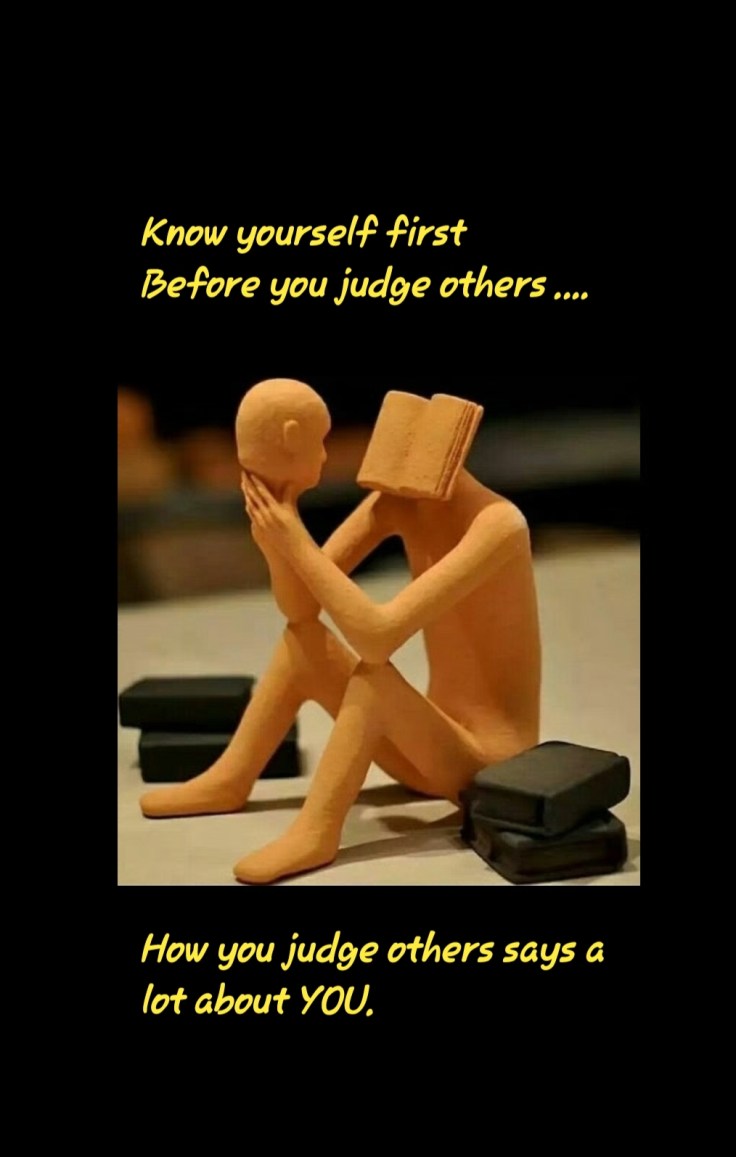
Whats important is “WHO YOU ARE”. And let others be who they want to be …….

So important.
So true.
Words can lie …..
But facial expressions and body language are real ……unless if one is a great actor.
Pay attention.
Stay focus ….
Do what has to be done …
Ignore the “noise” …….
Let your actions define who you are and what you stand for.
Time will tell ……

you will never reach your
destination i+ you stop
and throw stones a+
every dog that barks.
!k
EZEEN I
By Denise Lee Yohn @ February 05, 2018
Practically every organization today has a set of core values that ideally function as the “operating instructions” of the company. The goal of articulating the essential and enduring principles of your organization is to inform, inspire, and instruct the day-to-day behaviors of everyone who works at your company. But this rarely happens, because most core values statements don’t get at what’s unique about the firm.
According to the Booz Allen Hamilton and Aspen Institute’s Business and Society Program researchers, most corporations’ values incorporate similar words and ideas. 90% of them reference ethical behavior or use the word “integrity,” 88% mention commitment to customers, and 76% cite teamwork and trust.
I’ve seen this first-hand in my work helping companies define or re-define their core values. Several words always come up in practically every discussion, no matter if the company is a large enterprise or a small business, B2B or a B2C, product or service, new or established. Here are the five terms I ban from every core values list I work on:
Not only are these concepts mere table stakes for any business that wants to be competitive in today’s environment, they also don’t specify what is distinctive or uniquely valuable about your organization.
Differentiation is the key driver of brand power. Your company’s core values must embody what makes your company uniquely “you”—what makes you stand out from others.
To start to identify what your core values really should be, start by thinking about your business category. Core values should differ from category values, which all companies in any given category must adopt. For example, all fast-food restaurants must embody the values of speed and convenience; all software makers must value reliability and ease of use. A fast-food restaurant that says it values speed . . . well, it’s not saying anything different from any other fast-food restaurant.
Second, for your company’s values to be unique, the words or manner in which you choose to describe them should be distinctive. Instead of defaulting to overused terms, express your core values differently from other companies that might hold somewhat similar beliefs. Use a style or voice that uniquely represents your organization. Doing so provides more than a veneer of differentiation; it makes your values more distinct because they embody the spirit and personality of your organization. If your core values are not expressed with distinct words and in a unique style, how likely are your employees to pay attention to, much less care about, values that seem commonplace and conventional?
As a litmus test of whether or not a core value is unique, ask yourself the following question: Could another company claim this value as its own and live it out in the same way we do? Many companies list “passion,” “innovation,” and “caring” as their values—and they embody those values every day in expected ways such as developing new products and serving their customers with care. But if one of your values is to
“deliver WOW Through Service,” as is Zappos’, you’re claiming unique territory. “WOW” conveys the organization’s personality and spirit. Your people know to deliver—and your customers expect to receive—service that is above and beyond what’s called for and that triggers a visceral, emotional response.
Alternatively, ask yourself: Would any company select the opposite of your company’s value as its own? Some companies might take the position that “done is better than perfect” and many start-ups embrace the value of “just ship it” because they believe it’s more important to get a product into the market quickly than to ensure all the bugs have been taken out of it. But other companies like Google believe that “great just isn’t good enough” and they value striving for excellence. Both points of view are valid—and valued by different organizations. If the opposite of your value is one that an organization would find inspiring or instructive, then that value you’ve identified can distinguish you in a powerful way.
There isn’t one right set of values for every organization. Your core values should describe the collective attitudes and beliefs that you desire all employees to hold, translate those into specific actions and decisions that they should make, and then in turn show how those behaviors produce customer experiences that define and differentiate your brand. Your core values need to be unique.
————————————————————————————————————————-
Denise Lee Yohn is a leading authority on positioning great brands and building exceptional organizations, and has 25 years of experience working with world-class brands including Sony and Frito-Lay.


 Passions of Willie